Streamlining AWS Competency Programs

What is AWS Partner Network? (APN)

From Amazon AWS's marketing material:

The AWS Partner Network (APN) is a global community of organizations that leverage AWS technologies, programs, funding, and tools to build solutions and services for customers.

At it's core, the APN is a distribution channel. AWS account managers are incentivized to increase the ARR (annual recurring revenue) of their client accounts. They collaborate with third-party consultancies to fund activities that could lead to an eventual increase in spend (such as migrations). A system like this is prone to abuse, so AWS employs a framework for establishing credibility called the AWS Competency Program.

The AWS Competency Program

To gain competencies, partners undergo various automated and manual technical audits. The number of requirements for each competency varies, with some being much more intensive than others. The most important aspect for some of these competencies, is that they make additional funding available to the partner. For example, the funding available through the Migrations and Modernization Competency can be substantial.

Interactive Competency Graph

Below is an interactive network graph of the entire AWS competency program. While it's a lot to take in, it's interesting to see how the various industry verticals and their competencies relate to one another.
Competency Requirements

For the competencies that "matter", the barrier to entry is significantly high. They typically have other competencies as a prerequisite, and require investments into tools and personnel. Looking at everything together we can get an idea of what the most difficult (and potentially most lucrative) competencies are.

Quantifying Program Requirements

The audit a partner undergoes to gain a competency is called an FTR (Foundational Technical Review). Each FTR contains a categorized set of requirements, listed by program code. Here are some examples from the AWS Networking Competency:

ID Requirement Description
NETCON-001 The solution supports a highly available deployment model… […]
NETCON-008 The solution supports automated deployment of network and security services… […]
NETCON-009 The solution manages the life-cycle of the network or security services… […]

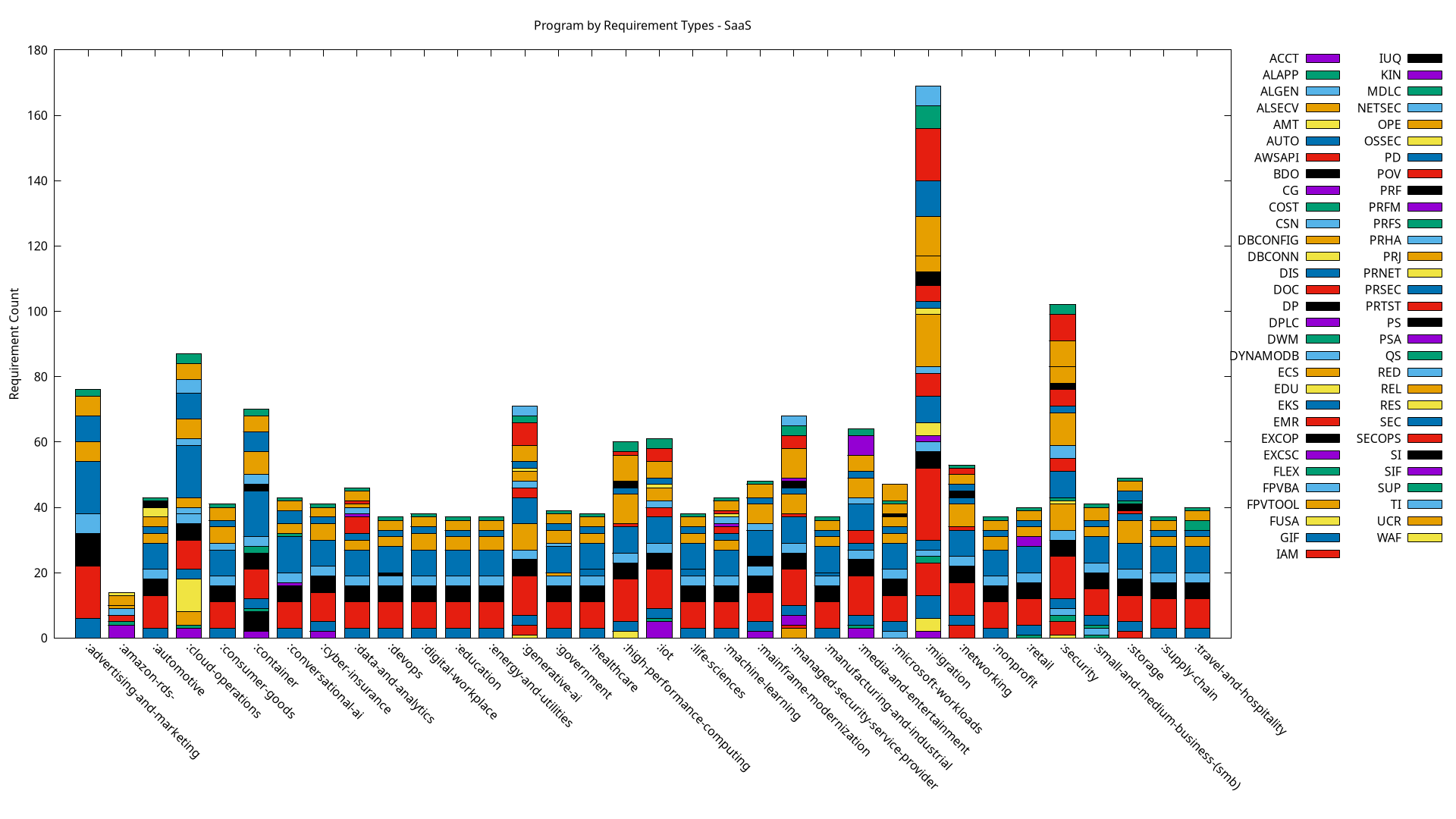
The graph below shows the number of requirements for the SaaS version of each competency, broken down by requirement ID prefix.

Finding Requirement Intersections

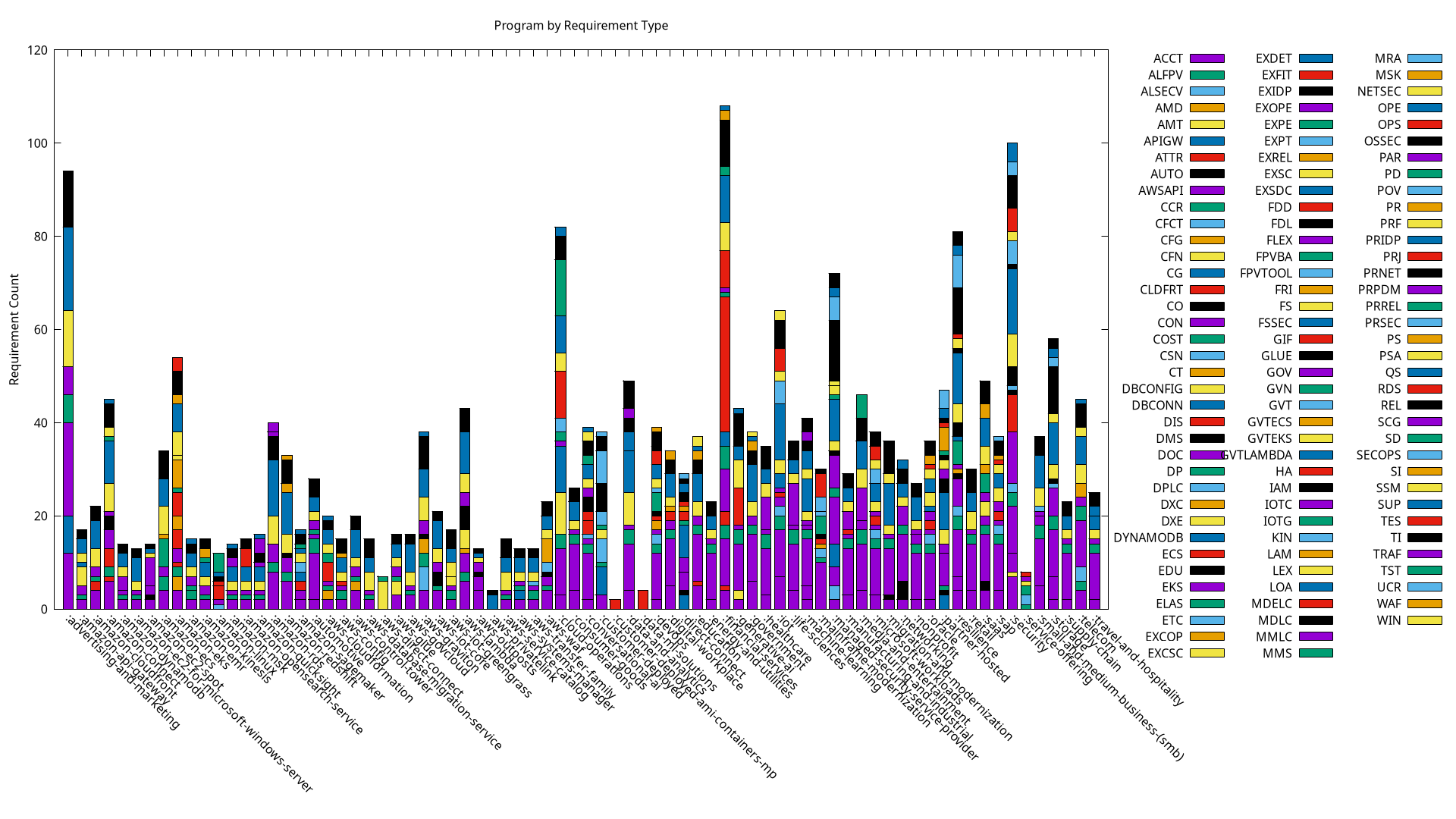
So, how is this information helpful? Consider this version of the competency chart that is for offerings that have neither a SaaS or customer-deployed aspect. What is perhaps slightly more apparent in this chart (putting aside the fact `gnuplot` ran out of colors…) is that nearly all of these competencies pull requirements from ACCT, IAM, OPE, and a few other requirement categories.

Putting It All Together

By now the astute observer will have realized that even for the largest competency programs, there are optimized paths to completion. Beyond reducing the time and effort to gain competencies, multiple related competencies can be gained simultaneously to enforce a differentiation. For example achieving both the Generative AI Competency and Healthcare Competency signals a good candidate for consulting with healthcare providers around the new HTI-1 regulation.

Is Any of This Worth It?

While the competency program is paused, maybe. Companies planning around the program re-launching with enhanced automation will benefit from being poised to differentiate themselves in the AWS Marketplace. For others, even once the program is active whether or not it is beneficial is a matter of perspective.

Where does this data come from?

This data is pulled directly from the AWS APN Competency program documentation. The HTML and xlsx data is then transformed with Clojure and loaded into a Sqlite3 database for simple language-agnostic querying. If you're interested in querying a copy of the database, feel free to reach out.